Background

I’m Ali Karimi — Mechanical Design Engineer, PhD in Industrial Engineering. I optimize energy systems, engineer sustainable solutions, and turn complexity into clarity.

Engineering the Future One Optimized System at a Time.

Logo Logo Logo Logo

Numbers And Facts
250+
Citations
4
H-index
5+
Years of Experience

SERVICES

01

Thermal-Fluid System Design and Optimization

Service 1

02

Prototyping and System Integration

Service 2

03

CAD Modeling, Simulation, and Technical Drawings

Service 3

04

Energy and Sustainability Solutions

Service 4

Selected Projects

All Projects
Project 1

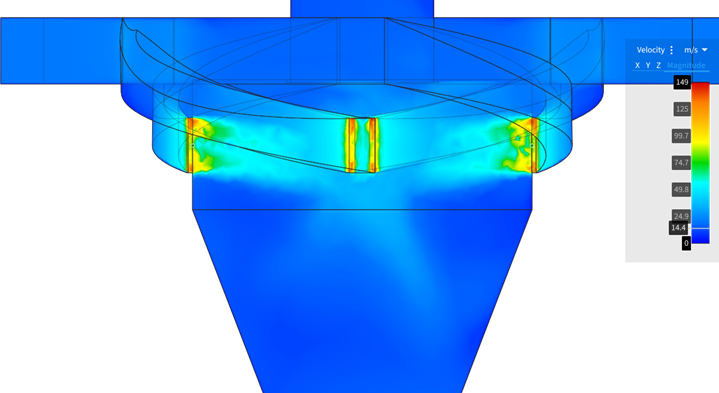
Enhanced Flow Optimization in Cyclone Separators

CFD

Project 2

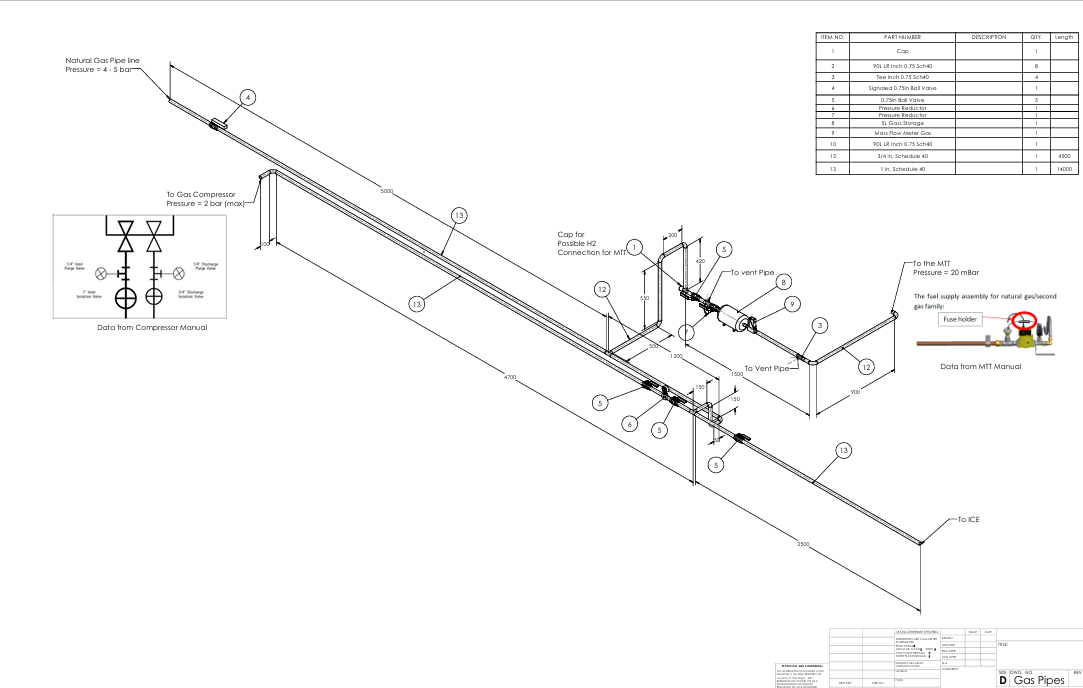
Development of Hydrogen Testing Infrastructure in Risavika, Stavanger

CAD

Project 3

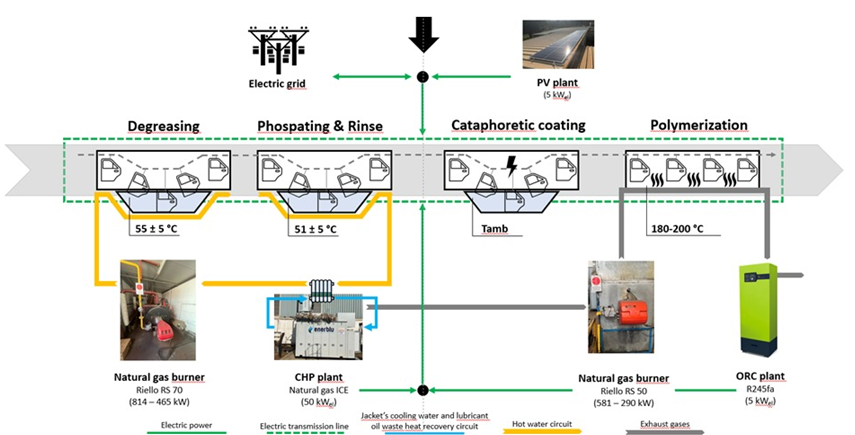
Waste Heat Recovery and Plant Design Optimization for Industrial Applications

OPTIMIZATION

Published Papers

All Papers

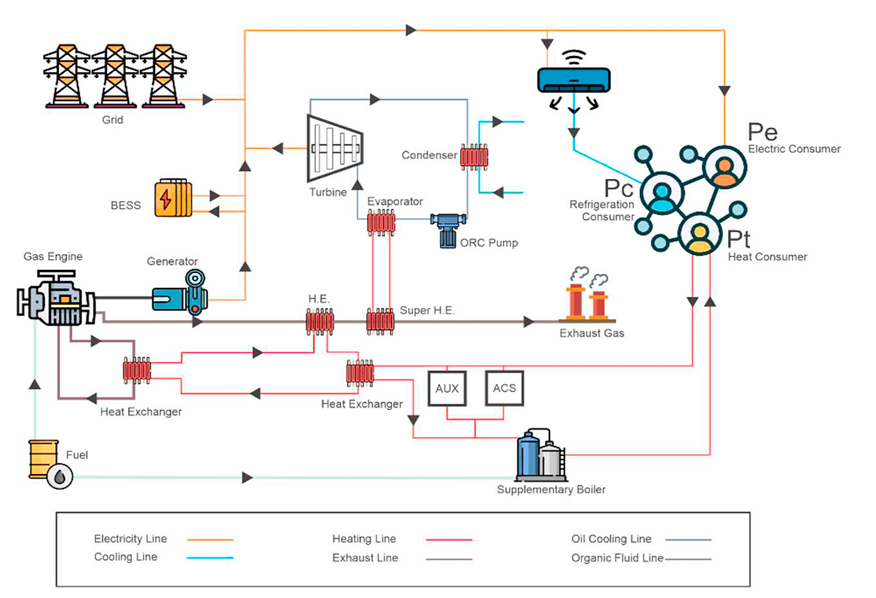
Techno-economic simulation and sensitivity analysis of modular cogeneration with Organic Rankine Cycle and battery energy storage system for enhanced energy performance

This paper presents a comprehensive evaluation of the efficiency and cost implications of a modular cogeneration plant integrated with a Battery Energy Storage System (BESS) and an Organic Rankine Cycle (ORC) plant. The objective is to assess the performance of the system when waste heat recovery through the ORC cycle is added to the exhaust line and compare it with the original system. Techno-economic parameters were analyzed for two different configurations: one with the maximum BESS size and another with the maximum Primary Energy Savings (PES). The results demonstrate that the incorporation of the ORC plant yields several notable outcomes. While there is a slight increase in the Simple Payback Period (SPB) and Net Present Value (NPV) in both configurations, the magnitudes of these increases are relatively low. In contrast, the introduction of the ORC cycle leads to substantial reductions in carbon dioxide (CO2) emissions and significant improvements in Primary Energy Savings (PES). For the Max PES configuration, a remarkable 25% reduction in CO2 emissions and a substantial 22% improvement in PES were observed. To further investigate the system's response to varying economic conditions, a sensitivity analysis was performed. The analysis considered the effects of changes in the cost of battery, Combined Heat and Power (CHP) unit, ORC components, electricity, and fuel on the system's Simple Payback Period (SPB) and Net Present Value (NPV). The results revealed that the sensitivity of the Max PES configuration to economic parameters was higher compared to the

Paper 1

Energy-saving and economic feasibility of a battery-integrated combined cooling, heating and power (CCHP) plant through waste heat recovery for H2O-NH3 based absorption, power and cooling (APC) system

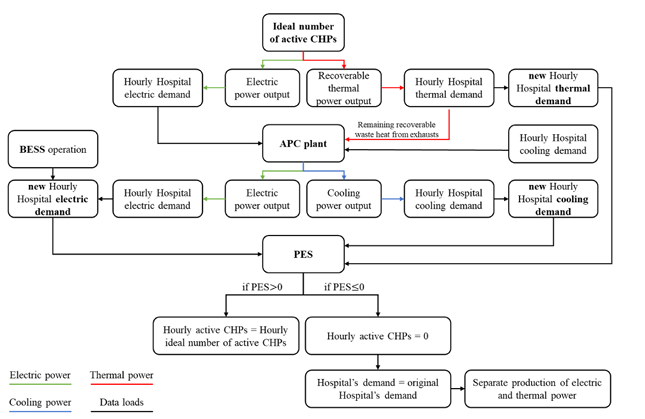
In this work the energy-saving potential and economic feasibility of a new trigeneration plant for a Hospital's facility was explored. The study focused on the integration of an ammonia-water absorption, power and cooling (APC) system inside a battery-integrated natural gas internal combustion engines (ICEs) based-CHP plant to constitute a highly flexible combined cooling, heating, and power plant (CCHP-BESS). Through onsite measurements the energy demand profile of the Oncological Reference Center Hospital (CROB), located in Italy, was obtained, then integrated with the mathematical models of the individual subsystems, tuned with experimental data. A proper control strategy was employed to maximize the efficiency of the plant, prioritizing the cooling or electric power production as a function of the Hospital's hourly demand. Results indicate the proposed CCHP-BESS configuration reaches a fossil primary energy saving of 19.88 % and an additional 23.99 % reduction in CO2 emissions compared to the CROB’S separate production of the same amount of energy. Despite a relatively high investment cost of the proposed plant, mostly attributed to the experimental nature of the ammonia-based turbine of the APC subsystem, the economic assessment shows a 3.3 years for the simple-pay back (SPB) period.

Paper 2

Numerical study on thermal performance of an air-cooled heat exchanger: Effects of hybrid nanofluid, pipe arrangement and cross section

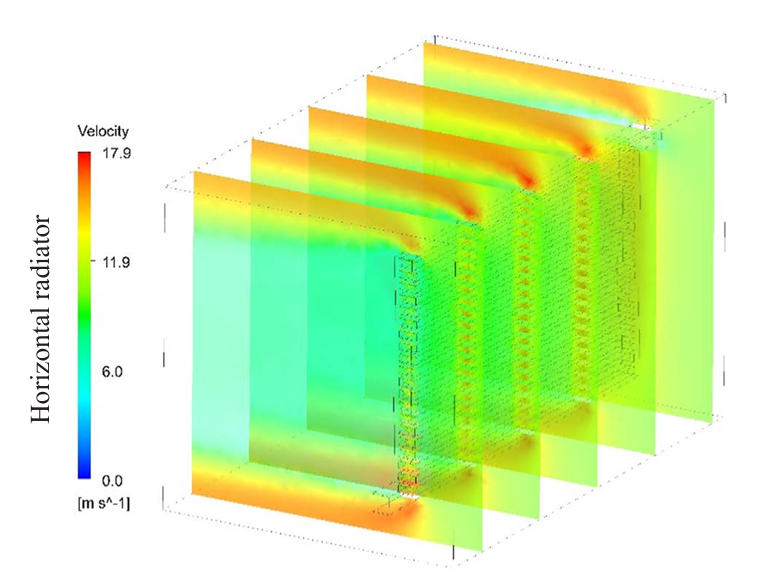
This study is a numerical investigation of a heat exchanger under external flow. Temperature variable properties are used to solve the governing equations. Air is selected as an external fluid and water and MgO-MWCNTs/EG hybrid nanofluid are selected as radiator fluid. In this paper, the efficiency of the horizontal and vertical radiator are studied using experimental data for thermo-physical properties of MgO-MWCNTs/EG Nanofluid. Then, tubes with circular and elliptic sections are investigated for different flows, inlet temperatures and concentrations. The pressure drop and Nusselt number for each simulation are analyzed. Results are presented in terms of temperature distribution, pressure drop, Nusselt number and their sensitivity analysis for different states. The results indicate that radiators with vertical tubes have better efficiency up to 10% than radiators with horizontal tubes. In addition, heat exchangers with circular pipes have 25% lower pressure drop and those with elliptical tubes had 10% higher Nusselt number. The finding shows that an increase in the Nano-fluid concentration improves the Nusselt number and increases the pressure drop.

Paper 3
ilakarimiila@gmail.com
X LinkedIn GitHub ORCID